
Sheetmetal transition
1. Describe the Problem
Requirement: We're currently facing a critical limitation in our sheet metal design workflow: Creo lacks native functionality to create square-to-round transitions, which are essential for hopper designs. While we've developed a workaround, it's both time-consuming and compromises accuracy. This gap is especially frustrating given our deep investment in Model Based Definition (MBD). We've spent significant time and effort building a robust MBD workflow that allows us to represent both formed and flat states within a single sheet metal model—streamlining communication between design and manufacturing.
Unfortunately, because Creo doesn't support this transition geometry, we're forced to rely on Autodesk Inventor for its lofted flange feature. This dependency disrupts our goal of a unified, model-driven process and introduces inefficiencies and data fragmentation. It’s a roadblock in our journey toward full MBD adoption across the enterprise. For a company committed to digital continuity and manufacturing precision, this missing capability in Creo is more than a feature request—it’s a strategic necessity.
Functional Requirements:
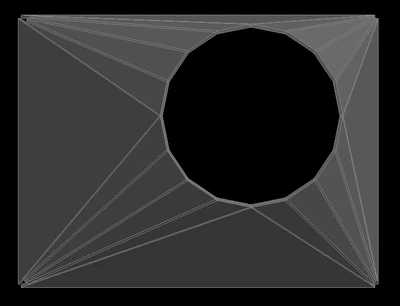
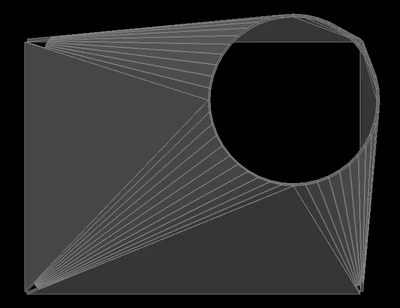
- Converged: Most of our transitions need to be converging at the square/rectangular corners (see image below)
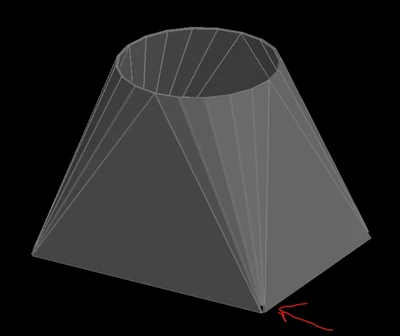
Figure 1: Converge
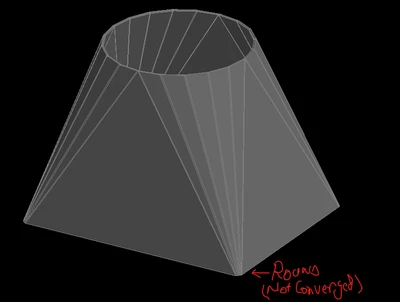
Figure 2: Rounded Corner (Not Converged)
- Control of Facet Length: We should be able to control the minimum length of the facet of the transition
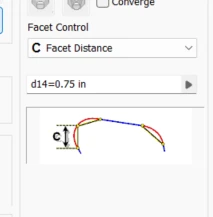
Controlling the facet length is essential in V-die bending because the material must rest securely on the die surface to ensure a proper bend. The size of the V-die is selected based on the material's thickness, and each die requires a minimum flange length to support the material during the break. When forming accurate transition quarter sections, it's important to bend fresh, unbroken material each time. To achieve this, the previous bend line must lie outside the V-die during the next operation. This is only possible when the facet length exceeds the opening of the V-die, allowing each new bend to occur without interference from the last
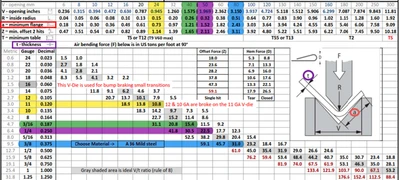
- Eccentric Transition: Should be able to work with eccentricity.
2. Are you using a workaround?
We are forced to rely on Autodesk Inventor for its lofted flange feature and bring the translated part into the Creo assemblies.
3. What is the use case for your organization?
We manufacture industrial filtration equipment, which often includes hoppers that require complex transitions from round to square or rectangular geometries. This feature will help us complete the MBD workflow for all of our equipment.
4. What impact does this problem currently have on your organization?
1. Reduces design efficiency and increases lead time 2. Complicates data management and traceability 3. Prevents full adoption of MBD across our sheet metal operations 4. Forces reliance on external software, increasing overhead and training requirements