
Color gradient thickness analysis in Creo Parametric
1. Describe the Problem
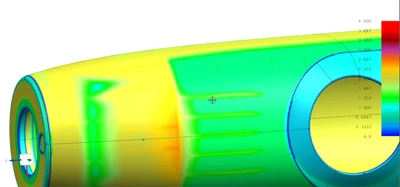
Currently, thickness analysis feature is, sadly, inferior to the solution provided in the tools from other vendors - and also to another tool of PTC portfolio. In most modern 3D design tools we have a full rolling ball analysis with color gradient flow indicating how thickness varies on the external surface of a part – making it easy to identify manufacturing defects:
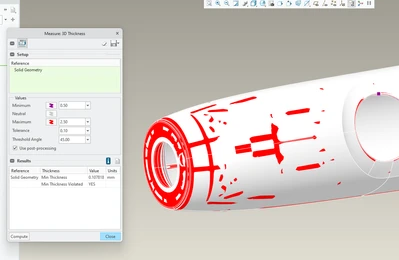
In Creo, you can only specify some limits and that’s it. The results, according to our engineers, are not good enough to assess the potential issues:
As I made my research, to my surprise, I noticed that PTC owns a tool not only with a rolling ball, but also with ray method and others (gradients).This functionality (the best I’ve seen so far) is available in a tool that is in a lower tier than Creo; that is in Onshape (https://www.youtube.com/watch?v=ULI0yQIGZkU).
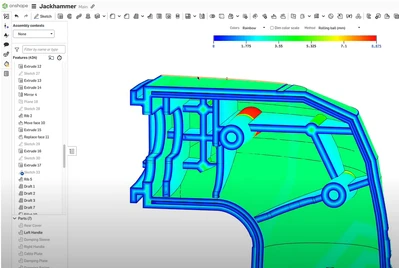
The tweaking in functionality of the tool – easy win for PTC development team – would beto do do the following:
Shoot the ball from every point as usual, but instead of marking the points where the thickness is above or below, just store the diameter value. This way we can have a table with polygon (or vertex) number, ball diameter value and color value. We can then sort this table by thickness, assign color of a gradient range to each of the polygons and color the texture of the external surface. The result will bring tremendous value to the users.
I’d love to know when you are planning to carry that functionality over to Creo?
2. Are you using a workaround?
We are currently using this functionality in tools from other vendors.
3. What is the use case for your organization?
The use case is to assess the quality of the external surfaces of plastic parts before the components go to injection mold design team for detailed assessment. This allows for significant reduction of rework time.
4. What impact does this problem currently have on your organization?
We are unable to successfully implement Creo for teams who's design process relies on this feature.