Oct 15, 2014 11:47 AM UTC
Question

Re: How to calculate bearing load

The analysis in the attached pdf that you're interested in uses roller bearings, whereas your model has ball bearings and a cage around those bearings. A very complicated model to run in contact. The attached analysis uses a shaft through the inner race, and the outer race is in contact with a plate, and runs a 2D analysis.

Your original post was how to calculate a bearing load, and I will show you how to do this. I'm going to show you how to apply a bearing load to a component and then check the applied load. Follow the below figures.
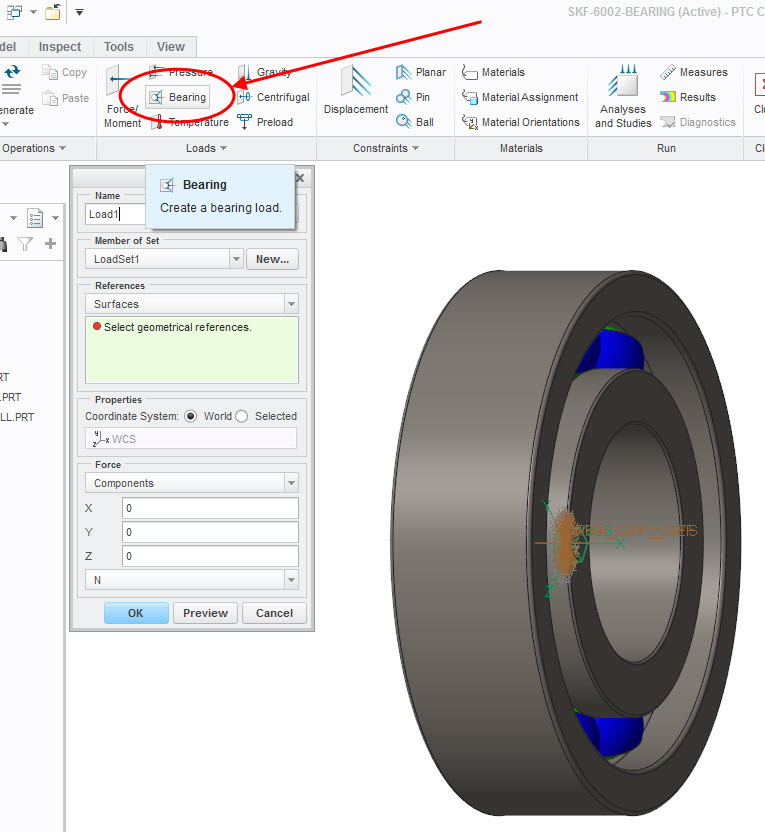
bearing_load_01.jpg

Figure 1: Select Bearing Load

bearing_load_02.jpg

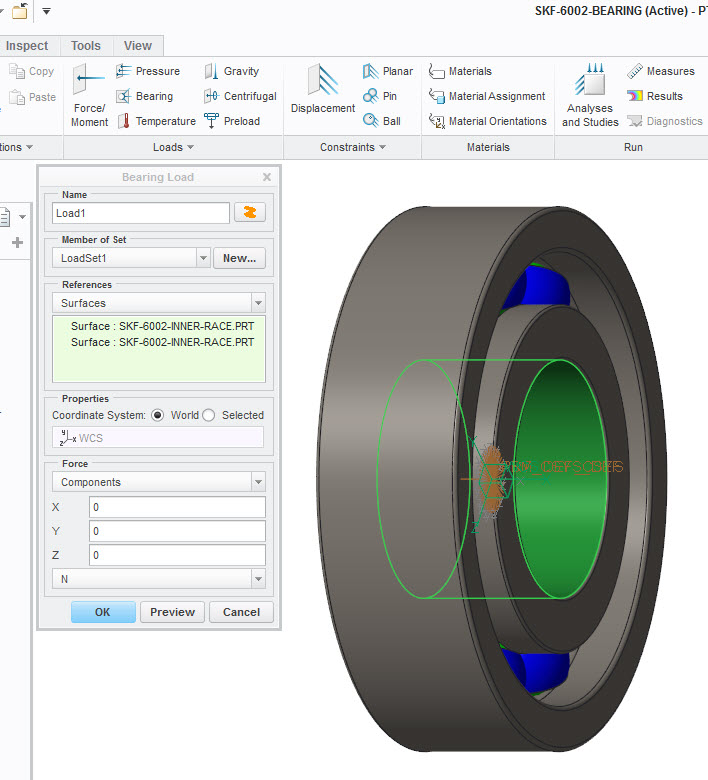
Figure 2: Select the Inner Race Surface
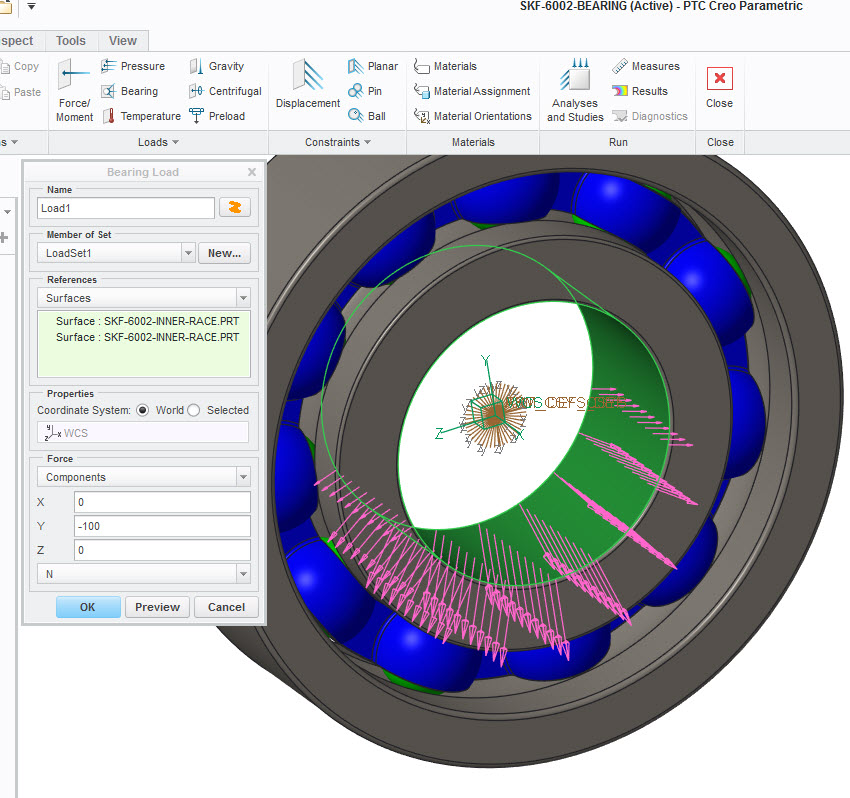
bearing_load_04.jpg

Figure 3: Select Preview to see the direction of the load, then select OK
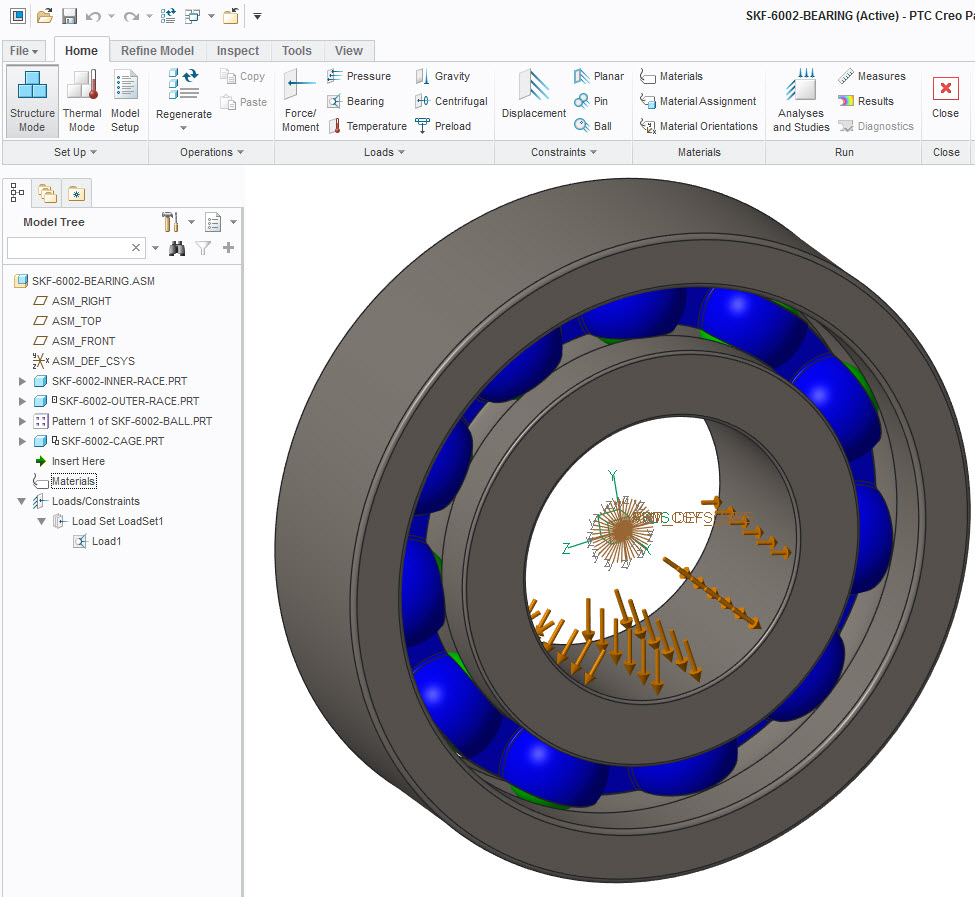
bearing_load_05.jpg

Figure 4: Bearing load applied

bearing_load_06.jpg

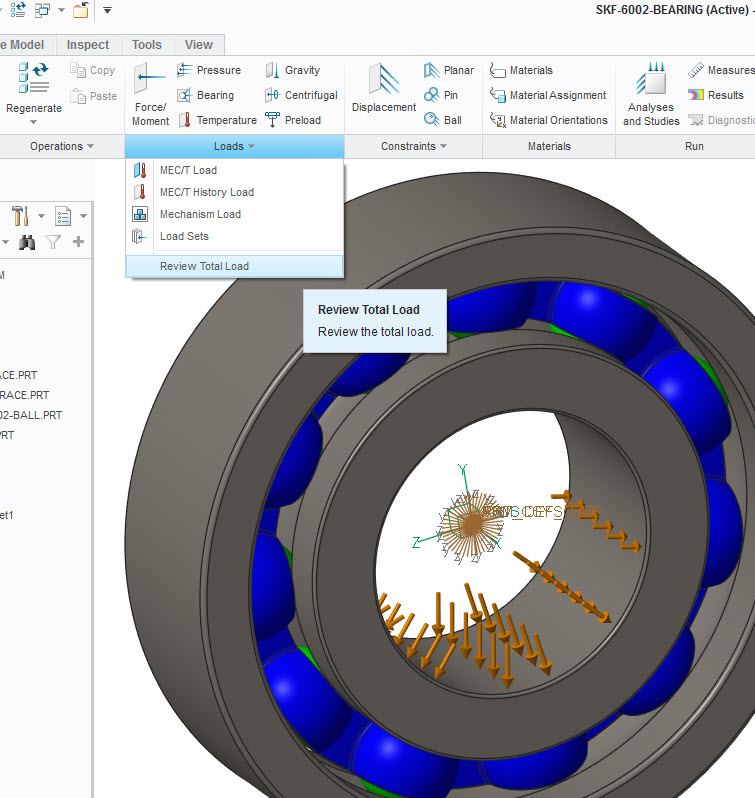
Figure 5: Review Total Load

bearing_load_07.jpg

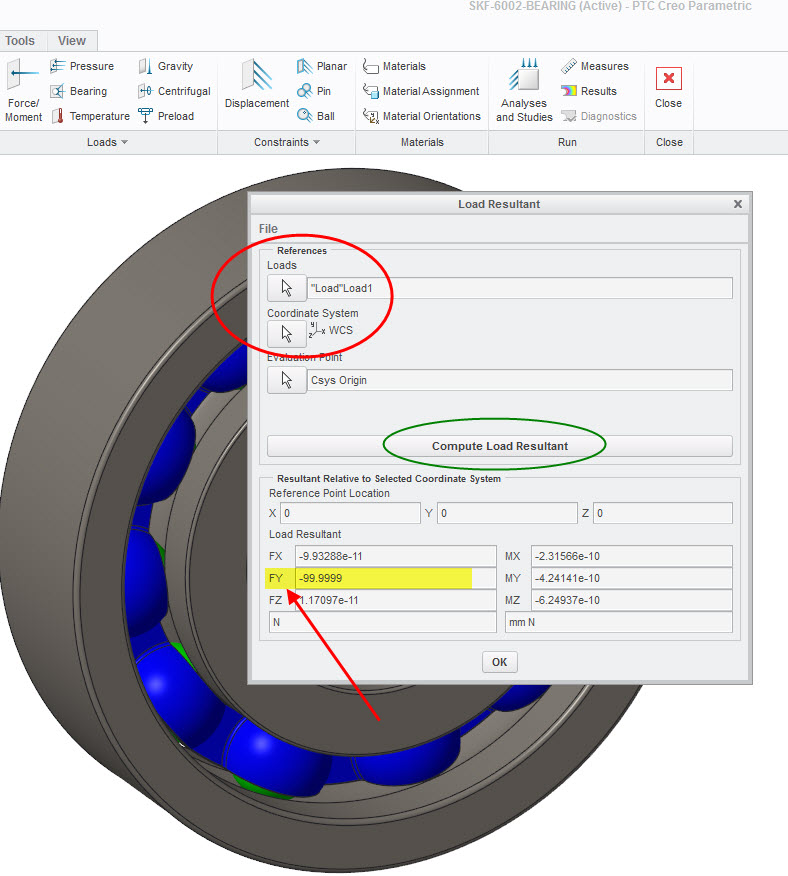
Figure 6: Compute the Resultant Load (or Bearing Load). Always check your load after is has been applied.

    2 replies

    Oct 15, 2014 12:31 PM UTC

    Steven,

    Thanks for the efforts buddy.

    Please let me know what is the take away from this. What should I interprete from the result(load Resultant). Because, I am not sure if my requirment matches your result.

    My expectation is when the load is applied on bearing, load distributes all over the circular inner face (inner race part), however, when we apply bearing load it only applies to the partial (semi circle) surface. So, I want to analysis, how the bearing will react if a static load is applied to it at its inner surface.

    Oct 20, 2014 11:04 AM UTC

    Thanks Steven. I got the result what I was looking for. As suggested by you I have applied pressure load and result matches my requirement.

    Amit