
Apr 2, 2015 11:27 AM UTC
Question

Re: Bike frame, FEA, Creo 2.0

Quick Check isn’t a convergence method since the model is run only for a single fixed (low) polynomial order (shown below p3-p3). The stress results should never be trusted. What a Quick Check is for is to quickly run the model through the solver in order to pick up any errors that have been made, for example in the constraints. A quick review of the results will also indicate whether any gross modeling errors have been made and possible to point out potential problem areas in the model.
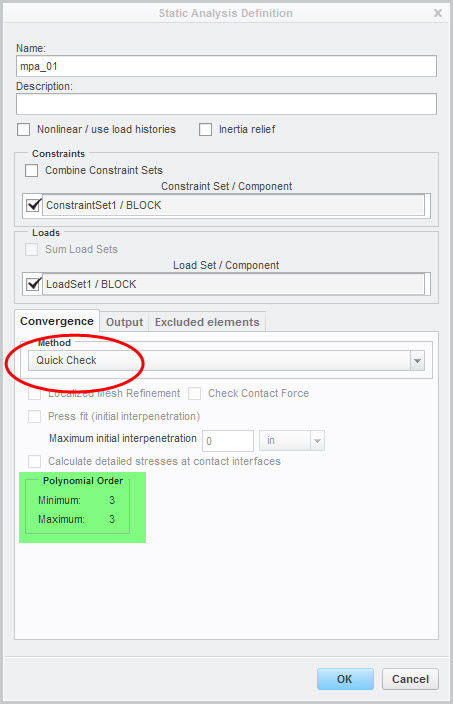
quick_check.jpg

    1 reply

    Apr 2, 2015 1:06 PM UTC

    I managed to get results with solids only

    1_9.jpg1_8.jpg

    I used rigid link for the shock pins. Bottom bracket and head tube are fixed. Which isnt right as the bottom tube takes almost no load. Rear axis takes horizontal load of 1500 N (triple times the riders weight).


    Ill try PIN for bottom bracket. And I have to tweak that critical area radius size and maybe add some thickness to the top tube. (or any other ideas?)

    Material Ill be using to build it is Al EN 7003, which should have yield point about 280 MPa.


    Tommorow I plan to do simulation according to EN 14781, I will be using rigid fork model and rigid link for the shock pins as it is suggested in that norm (http://zencomposites.com/afnor.pdf). I will be doing a fatique calculation in Creo. And I will use finer mesh.


    I have no succes using springs here yet, Creo either shouts that there are too many degrees of freedom or it has trouble with convergency at step 2.